

Summary
Where an event occurring after the contract was made, for which neither party is responsible, renders performance impossible, illegal or radically different from what was contemplated, the contract is frustrated and is discharged automatically. The threshold is high. Increased cost, delay and hardship do not suffice, and an event that the parties foresaw, or ought to have foreseen, as a serious possibility is ordinarily a risk they accepted. Where the contract contains a force majeure clause covering the event, the clause governs instead.
Last reviewed 22 September 2026
The legal position
Frustration. Frustration requires a supervening event: one that occurs after the contract is formed, that is not the fault of either party, and that renders performance impossible, illegal or radically different from that which was contemplated. Hardship, inconvenience or financial loss does not bring the doctrine into operation. An event which the parties foresaw, or plainly ought to have foreseen, as a serious possibility is generally treated as a risk that they accepted.
Force majeure clauses. Where the contract makes express provision for the event, the clause governs and the doctrine of frustration has no application. A properly drafted force majeure clause identifies the events to which it applies and requires that they be beyond the reasonable control of the affected party. It prescribes requirements of notice and imposes an obligation to mitigate the effects of the event and to resume performance. It also confers a right of termination if the event continues beyond a stated period.
The consequences of frustration in Trinidad and Tobago. Several Caribbean jurisdictions have enacted legislation empowering the court to adjust the parties' losses after frustration. Trinidad and Tobago has no such legislation, and the consequences are governed by the common law:
- The contract is discharged automatically, and prospectively, from the date of the frustrating event.
- Sums that fell due before the event remain payable.
- Money already paid is recoverable only upon a total failure of consideration, that is, only where the payer received no part of what was bargained for.
- The court has no statutory power to make allowance for expenses incurred, or to value a partial performance.
In the sale of specific goods, where the goods perish without the fault of either party before the risk passes to the buyer, the agreement is avoided (Sale of Goods Act, s 9).
Practical implications
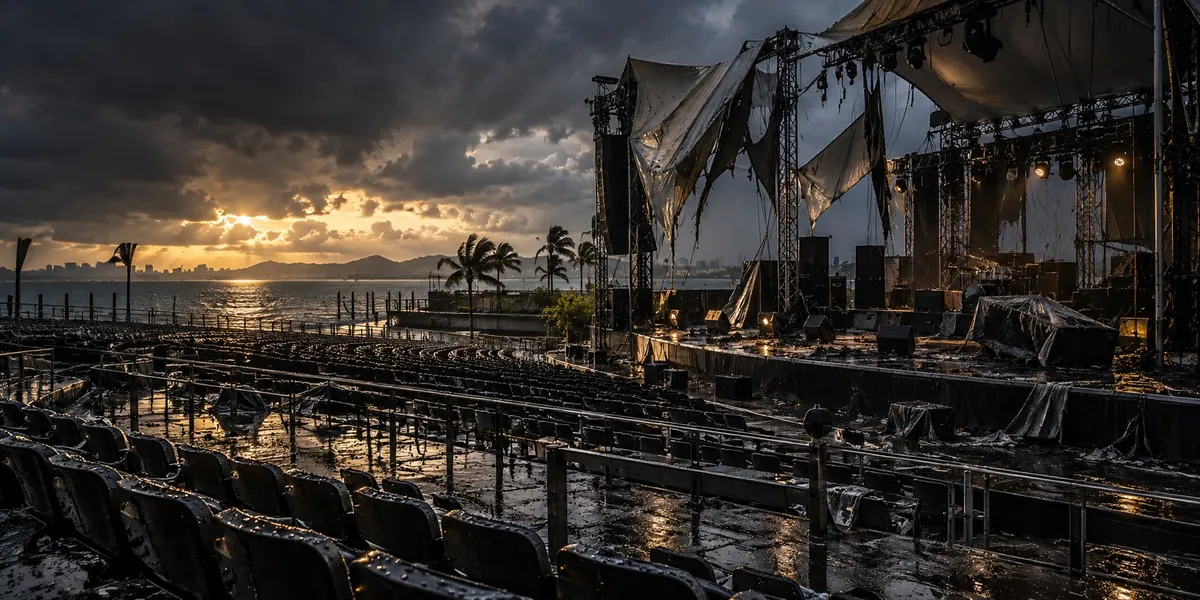
The destruction of the subject matter or the venue of the contract may frustrate it. So may a supervening legal prohibition that renders performance illegal, or the cancellation of the event that was the common foundation of the contract.
By contrast, a substantial increase in the cost of materials, delay in the delivery of supplies, and seasonal weather conditions that could reasonably have been anticipated will not ordinarily frustrate a contract.
As to money already paid, the position in Trinidad and Tobago is less favourable to the payer than in jurisdictions that have frustrated contracts legislation. A payer who received no part of the bargained-for performance may recover the money paid. A payer who received any part of it, however small, may recover nothing at common law.
Recommended steps
The contract should first be examined for a force majeure clause and for any cancellation or refund provision, and any procedure for notice should be followed strictly.
The other party should be notified promptly and in writing, with evidence of the event and of its effect upon performance.
A party should not assume that an event described as an "act of God" excuses performance. The legal test is narrow.
In drafting contracts, the parties should not rely upon the general law to apportion losses, since Trinidad and Tobago has no statute for that purpose. The contract should specify the events that are to excuse performance, the treatment of money already paid, and the circumstances in which either party may terminate.
Important notice. This commentary is a general statement of the law of the Republic of Trinidad and Tobago and is provided for information purposes only. It does not constitute legal advice, and it is not to be relied upon as legal advice or as a complete or current statement of the law. The law may have changed since the date of last review. Readers should verify all information for themselves, including the current text of any legislation referred to, and should obtain legal advice on their particular circumstances before acting, or refraining from acting, on anything in this commentary. Reading this commentary does not create an attorney-client relationship, and no responsibility is accepted for any loss arising from reliance on it. Any decision of a court referred to in this commentary is cited for the principle it states; similar results cannot be guaranteed, and a decision may be subject to appeal or change.
Commentary / Contract Law
What happens when events beyond the parties' control make performance impossible?
By Suraj Sakal, Attorney-at-Law, called to the Bar of the Republic of Trinidad and Tobago